Who may be responsible when a passenger is injured in a Georgia bus crash? A bus accident lawyer explains
November 5, 2026
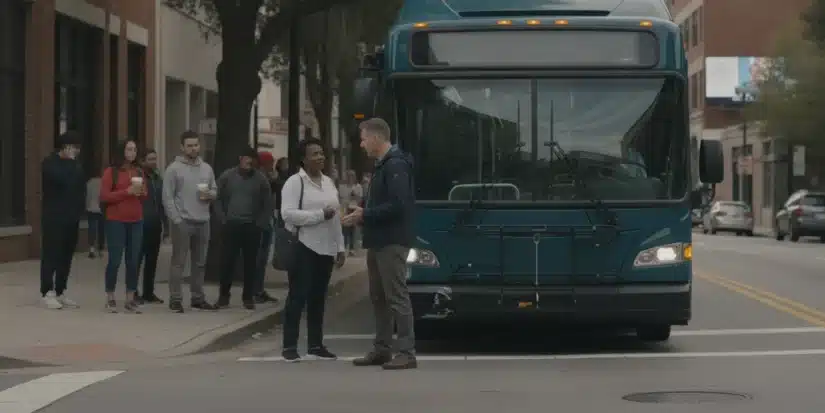
A bus crash can leave a passenger hurt, unsure who operated the vehicle, and uncertain what to do next. A bus accident lawyer may investigate possible responsibility, but a bus company is not automatically at fault simply because someone was injured while riding. The cause, each party’s role, and the evidence connecting the crash to the injury all matter.
Request a free case evaluation
Who may be responsible after a Georgia bus crash?
Potentially responsible parties depend on how the incident happened. They may include the bus driver, the organization operating the service, the vehicle owner, a maintenance contractor, a manufacturer of a component, another driver, or an entity responsible for a roadway condition. More than one party may warrant review, and the investigation may also find that a suspected party had no role in causing the injury.
For example, a passenger is thrown forward during a sudden stop. The stop alone does not show whether the driver acted carelessly: the driver may have been avoiding an immediate hazard. Investigators might look at what happened just before the stop, what could be seen from the driver’s position, whether another vehicle created the hazard, and whether the passenger’s account matches any available video or witness description.
In a different situation, a collision might involve both a driver’s decision and a mechanical issue. Maintenance records could matter if there is evidence a defect contributed to the event. The relevant question is not simply whose name appears on the bus or ticket. It is what each person or organization did, what responsibilities they had, and whether the evidence connects their conduct or a condition they controlled to the harm.
Passengers can be hurt in a collision, a sudden maneuver, a bus leaving the road, a fall while boarding or exiting, or an object moving inside the vehicle. Each type of event raises different questions. An investigation should focus on the specific mechanism of injury rather than assuming that every bus-related injury has the same cause.
How can the kind of bus service shape the inquiry?
“Bus” can mean a city transit vehicle, a school bus, a charter coach, a tour bus, or a shuttle. The vehicle owner, operator, route controller, and organization that arranged the trip may be different entities. Identifying the service helps direct questions to the right people and records.
For public transit, note the route, direction, stop, approximate time, and bus number if visible. A route number alone may not identify a particular run, so a ticket, pass, travel-app record, or a contemporaneous note can help narrow it down. A passenger may also be able to identify the operator from the vehicle markings or trip information. Do not assume that the entity that owns a bus necessarily employed the driver or managed the route.
For a school-related trip, useful questions may include who arranged transportation, who operated the bus, and which organization made the relevant safety decisions. For a charter or tour, retain the itinerary, booking confirmation, and communications with the carrier or organizer. A shuttle passenger may have information from a hotel, employer, event organizer, or transportation provider that helps identify who controlled the service.
The firm has a Georgia bus accident information page that describes the subject more broadly. As with any general resource, it cannot resolve which party was responsible in a particular collision.
When might a driver’s actions matter?
A driver’s actions may deserve close review if the crash involved speed, distraction, following distance, an unsafe turn or lane change, failure to yield, or a response to a road hazard. The point is not to label a driver based on a single impression. It is to compare what passengers remember with physical evidence, other accounts, and available records.
Timing can be important. If a passenger remembers a sharp turn, investigators may ask what was happening in the lane, whether another road user moved unexpectedly, and whether the bus had room to stop or change course. If a driver braked hard, the reason for braking matters. A maneuver may look abrupt to a passenger while still being a response to a hazard that appeared suddenly.
The driver’s relationship with the operator may also matter. A driver could work directly for a transit provider or private carrier, or the trip could involve another operating arrangement. The route, dispatch, assignment, and vehicle records may help establish who directed or controlled parts of the service. Those details should be confirmed rather than inferred from a uniform, logo, or bus registration.
Passenger accounts can be useful even if a person did not see the road. Write down what you directly experienced: whether the bus was moving, stopping, or turning; where you were seated or standing; what you heard; and what happened to you. Keep separate what you personally remember from what another passenger later told you.
Could the bus operator or owner share responsibility?
An operating company or public transportation provider may be relevant if its own practices or decisions contributed to the incident. Depending on the facts, questions might involve vehicle inspections and repairs, driver training, supervision, scheduling, safety procedures, or how a reported problem was handled. The operator’s connection to the trip is a reason to investigate, not proof by itself that it caused an injury.
Consider a passenger who reports that a bus door closed on a bag or person. Depending on the evidence, the inquiry might include the condition of the door, how it was operated, what the driver could see, whether a warning or other safety feature worked, and what inspection or repair history exists. If the injury instead followed a collision with another car, those door-related questions may have no bearing at all. The details determine which records are useful.
Ownership and operation are not always the same. The bus may belong to one organization while another runs the route, performs repairs, or provides a driver. Trip documents, vehicle information, maintenance records, and communications may help identify those roles. A passenger generally does not need to know the corporate structure before asking for guidance, but recording the names and markings they can see may help avoid confusing one entity with another.
If a public agency could be involved, special procedures and timing may apply. The responsible entity is not always obvious from the location or vehicle markings. A passenger should not assume that the process for a private carrier and the process for a public operator are identical; early, case-specific guidance can help identify what should be checked.
When should maintenance or a part be examined?
Mechanical issues may become relevant if there is evidence that brakes, tires, steering, doors, restraints, or another component failed or was in an unsafe condition. The bus owner or operator may be part of the inquiry, and a maintenance contractor or component maker could also warrant review depending on the component, work history, and evidence.
A damaged part found after a crash does not automatically prove that it caused the crash. The damage could have occurred during impact. A careful investigation looks at the sequence: when the issue first appeared, whether it was reported, what inspections or repairs followed, and whether the condition could have affected how the bus operated. Relevant records may include inspection forms, repair orders, service histories, and communications about a reported problem.
Preserving the vehicle or component may be important when a mechanical cause is genuinely suspected. Passengers should not try to inspect, remove, or handle equipment themselves. Instead, keep any photographs or written information already available and record who told you about a suspected problem. A qualified inspection and the underlying records may be needed to evaluate whether the issue actually contributed.
Where evidence points to a product issue, the specific part and its history matter. The firm’s product-liability overview explains that general area of law; it does not establish that a particular component was defective or caused a specific injury.
What if another driver or the roadway was involved?
A car, truck, or other road user may have contributed by striking the bus, cutting in front of it, or creating a hazard that led to a sudden maneuver. The bus driver’s response and the other road user’s actions should be considered together. The existence of a second vehicle does not automatically clear the bus driver, and a bus’s involvement does not automatically make its operator responsible.
Roadway conditions may also deserve attention if a defect, construction setup, sign, signal, visibility issue, or pavement condition appears connected to the event. A hazard being present does not by itself establish that a city, county, state agency, contractor, or other party is legally responsible. Relevant questions can include who controlled the location, what condition existed at the time, and whether evidence connects it to the collision.
Location details help make the inquiry practical. Record the nearest intersection, direction of travel, lane, stop, and any construction or traffic-control features you remember. If you have photographs, preserve the originals. Conditions can change after a crash, so a later image may not show the scene as it was at the time.
Claims involving a public entity may follow different procedures from claims against private parties. It can take investigation to identify the entity that controlled the road or transportation service. Because these questions are fact-specific, an online explanation should not be used as a deadline calculation or a decision about whether a claim can proceed.
What evidence can help clarify responsibility?
Different people and organizations may hold different pieces of information. A passenger can start by preserving what is already available and keeping a clear record of where each item came from. Some records may be kept only for a limited time, so a timely request that relevant material be retained may matter. A request does not guarantee access to the material, and formal steps may be needed to obtain it.
- Your own account: Write down the date, approximate time, location, route, direction, where you were in the bus, and what you remember before and after the incident. Use your own words, mark what you are unsure about, and date the note.
- Trip identification: Keep the ticket, pass, reservation, itinerary, receipt, app confirmation, or route details. Note the bus number and operator markings if you recorded them.
- Photographs and video: Preserve original images of the scene, vehicle, visible damage, surroundings, and injuries. Keep originals unedited. If you need to mark up a copy for your own reference, store it separately.
- Witness information: Record names and contact details for people willing to share them, plus where they were sitting or standing. A short note about what they said they observed can help you remember the conversation.
- Reports and correspondence: Save an incident number, report, operator communication, insurer letter, and any message from an investigating agency. Note the date and sender of each contact.
- Medical and expense records: Keep appointment information, bills, discharge paperwork, and a simple record of expenses and how the injury affects ordinary activities. Share accurate symptoms with medical professionals.
- Records held by others: Depending on the incident, potentially relevant material may include onboard or nearby video, vehicle data, driver and dispatch records, inspection and maintenance files, and incident reports.
Be precise about the limits of a source. A witness may have seen only one part of the event. A video camera may not capture every angle. An incident report may record the information known when it was prepared rather than a final account of the cause. Information from one source can help guide questions, but it does not always answer them alone.
Broad traffic-safety reports also need to be read within their scope. For example, the Georgia Traffic Safety Facts report on older drivers tracks restraint use among seriously injured older drivers and passengers. That kind of population-level information is background safety context; it does not identify the cause of a bus crash or establish fault in an individual incident.
Keep a basic communication timeline: whom you contacted, when, what you sent, and whether you received a response. Save copies of letters and forms. Avoid guessing about details you do not remember or posting speculation about fault. If an insurer or organization requests a recorded statement or release, understand what is being requested before deciding how to respond.
A practical preservation request should identify the incident clearly enough for the recipient to locate it. Include the date, approximate time, route or trip, vehicle number if known, location, and your contact information. You can identify categories of material that may relate to the event, such as onboard video, dispatch communications, vehicle inspection records, or an incident report, without claiming that every item exists. Keep a copy of the request and note when and how it was sent. A request helps document what you asked to preserve; it does not by itself guarantee that records will be provided or establish that a claim is valid.
When saving digital material, keep the original file and its date information when possible. Send a copy rather than the only version, and make a backup in a secure place. If an image came from another person, note who provided it and when. These small steps can help keep the source and context clear if you later need to explain how the item came into your possession.
What practical steps can an injured passenger take?
First, focus on immediate safety and medical needs. Contact emergency services when necessary and follow appropriate medical guidance. If symptoms change or become clearer later, tell a medical professional. A passenger does not need to determine who was at fault before seeking care or documenting an injury.
When it is safe, identify the bus service and preserve basic trip information. Ask how to obtain an incident reference number if a report is made. If you can do so safely, note witness names and take photographs of the scene and vehicle. Do not put yourself at risk to gather evidence or interfere with anyone’s investigation.
Next, organize the information you have into a simple folder. Separate trip details, photographs, witness contacts, medical records, and communications. Create a short timeline of the incident and subsequent contacts. Record what you directly remember and distinguish it from what you learned later. This organization can make a future conversation clearer without requiring you to decide the legal issues yourself.
If a transportation provider or insurer contacts you, note the caller’s name, organization, date, and subject of the conversation. You can ask who the person represents and request that information be sent in writing. Be cautious about signing a release or agreeing to a resolution before you understand its terms and the information it covers.
Passengers may also find the firm’s personal-injury questions and answers useful for general context. The facts of a bus crash still need to be considered on their own.
How does an investigation compare possible causes?
A sound review usually begins by building a timeline, then asking what evidence could confirm or challenge each possible explanation. The point is not to collect every imaginable record. It is to identify the materials that bear on the specific event and the roles of the people or organizations involved.
- Identify the trip and vehicle. Use route, booking, operator, and vehicle details to distinguish the bus and service from others operating in the area.
- Describe the event carefully. Note whether the injury followed an impact, abrupt stop, turn, fall, door incident, or another event. Separate direct observation from inference.
- List the possible causes raised by the facts. These might include driver conduct, another road user, an equipment issue, an operator practice, or a roadway condition. A possibility is a question for review, not a finding.
- Match each question to evidence. A video or witness may help with movement and timing; maintenance files may help with a suspected mechanical issue; trip records may identify the operator. Not every category will apply.
- Consider the connection to the injury. An event or unsafe condition matters to a claim only if evidence connects it to the harm. Medical records and the timing of symptoms may form part of that assessment.
- Note what remains unknown. An incomplete account is not a reason to fill gaps with assumptions. It helps identify what additional records or interviews may be useful.
For instance, suppose two passengers describe a sudden swerve, while a photograph shows damage to the bus’s side. Those facts may help identify lines of inquiry, but they do not by themselves explain whether another vehicle forced the maneuver, whether the driver had a safe alternative, or whether a road condition played a part. An investigation would look for additional accounts, scene information, video, and records that could address those questions.
Another example: a passenger suspects a brake problem because the bus stopped abruptly. Abrupt braking alone does not establish a defect; the driver may have responded to a hazard. A mechanical theory would need evidence about the equipment and sequence of events. Looking at alternative explanations is part of careful fact-finding, not a reason to disregard the passenger’s experience.
What if several parties or insurers are involved?
A crash can involve several organizations with different roles. One may own the vehicle, another may operate the route, and a separate company may maintain the bus. Another driver’s insurer may also be involved. These relationships can make it unclear who should receive a question or hold a particular record.
Keep a list of each organization that contacts you, the role it says it has, and the information it requests. Save letters, claim numbers, and forms. Do not assume that a person who calls on behalf of an insurer speaks for every organization connected to the trip. Nor does the existence of an insurance policy establish fault or guarantee payment.
Georgia injury claims can involve questions about the conduct of more than one party and the effect of a claimant’s own actions. The details matter, and a general article cannot predict how those issues apply to an individual. An attorney can review what is known, identify missing facts, and explain what additional investigation may be appropriate.
How can a passenger prepare for a case evaluation?
A concise account is a useful place to start. Include when and where the crash happened, the type of bus service, what you remember, where you were in the vehicle, what injury or symptoms followed, and what care you received. Identify any operator or insurer that contacted you. If a detail is uncertain, say that instead of guessing.
Bring whatever is available: trip records, photographs, witness information, medical paperwork, an incident number, and correspondence. You do not need to have every record before asking questions. If someone else has a document or video, note who has it and how you learned about it.
Questions to consider include: Which individuals or organizations should be identified? What records may be important to preserve, and who might hold them? Could a public provider or roadway entity change the procedures that need review? What information would help connect the event to the injury? These are practical questions; answers depend on the particular facts and applicable process.
People across Georgia can learn more about the firm’s attorneys and approach or contact the firm for a free evaluation. A conversation is a way to discuss the circumstances and ask questions, not a promise about whether a claim will be accepted or what result may follow.
Talk with the firm about a free evaluation
Frequently asked questions
Is a bus company automatically responsible when a passenger is injured?
No. The operator may be one party to examine, but responsibility depends on evidence about the cause, the operator’s role, and the connection to the passenger’s injury. Another driver, a mechanical condition, or several contributing factors may also be relevant.
Can more than one party be involved in a bus crash claim?
More than one party may warrant investigation when the available facts suggest that different actions or conditions contributed. For example, a driver’s response and another road user’s conduct might both need review. Whether a party is legally responsible requires an evaluation of the specific evidence.
What should I do if I do not know the bus operator’s name?
Preserve details that can help identify the trip: route, date and time, stop or location, direction, bus number if known, ticket or booking information, and visible vehicle markings. An incident reference number or communications from the service may also help identify the organization.
What records should I keep after the incident?
Keep your notes, trip information, original photographs, witness details, incident records, medical paperwork, and communications with transportation providers or insurers. Make a simple timeline and record who holds any material you do not have. The useful records vary with the type of incident.
Does a public bus crash follow the same process as a private bus crash?
Not necessarily. The identity of the operator and any public entity involved may affect procedures and timing. The specific parties and facts should be reviewed promptly rather than assuming one process applies to every bus service.
What should passengers keep in mind?
After a Georgia bus crash, responsibility may involve one party or several, but it cannot be determined from the fact of injury alone. Identify the trip, preserve the information you have, seek appropriate care, and get case-specific guidance if you need help understanding the available next steps.