What to Know Before Choosing a Motorcycle Injury Lawyer in Georgia
November 12, 2026
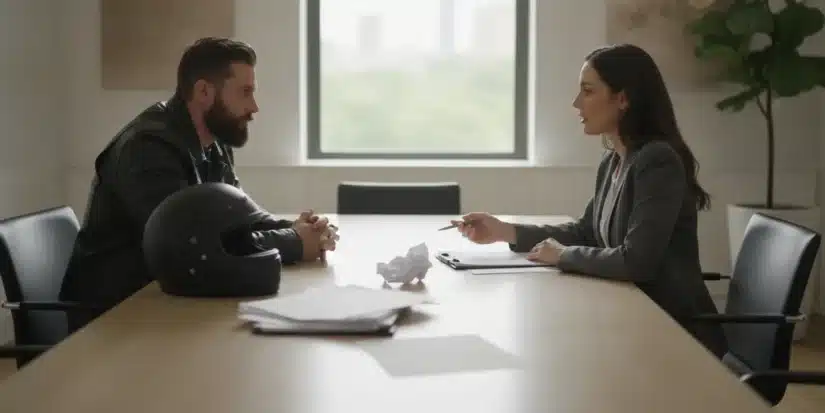
Choosing a motorcycle injury lawyer in Georgia means finding someone who can explain how they would evaluate your particular crash, not someone who promises a result before reviewing it. After a collision, questions about evidence, fault, insurance, medical treatment, and expenses can arrive all at once. A focused case review can help you understand the issues to investigate and decide whether the lawyer’s communication and approach fit your needs.
Request a free case consultation
What should a motorcycle injury lawyer understand?
Motorcycle collisions can raise questions that deserve careful attention to the details. The positions of the vehicles, sight lines, roadway conditions, traffic controls, and sequence of events may all matter. So can the way the collision affected the rider and what treatment followed. A lawyer evaluating a motorcycle claim should be able to explain what information would help clarify those questions and what is still unknown.
During an initial conversation, ask whether the lawyer handles motorcycle injury matters and what they would want to learn about your crash. The answer should connect to your circumstances rather than rely on a generic script. Useful topics may include:
- Where each vehicle was before impact, its direction of travel, and what happened immediately afterward.
- Whether road design, visibility, weather, lighting, traffic signals, or surface conditions may be relevant.
- Whether photographs, vehicle damage, witness accounts, or available video could help explain the collision.
- What injuries were reported, what treatment has occurred, and whether additional care is expected.
- Whether another driver, vehicle owner, business, or other party may need to be considered based on the facts.
Ask the lawyer to separate facts already documented from questions that need investigation. An early impression is not a final conclusion. Henningsen Injury Attorneys describes its motorcycle accident representation on its practice page; in a case review, ask how the general process would apply to the details you share.
How will the lawyer investigate the collision?
Evidence can become harder to locate as time passes. Vehicles may be repaired, businesses may retain camera footage for only a limited period, roadway conditions can change, and people may remember events differently later. Ask who will review the material you provide, how the firm will identify missing information, and what additional steps could be considered. The appropriate investigation depends on the collision and the evidence available.
What can you preserve yourself?
If you can do so safely and lawfully, keep copies of photographs and videos from the scene, the damaged motorcycle and other vehicles, visible injuries, road markings, signs, and relevant surroundings. Preserve original files when possible. Note when and where each image was taken, and avoid editing or adding annotations to the only copy. If someone else took a photograph, record who took it and how you received it.
Write down witness names and contact information if you have them, along with a brief note of what each person may have seen. Keep the crash or incident report, claim numbers, letters, emails, and messages from insurers. Do not assume that a report includes every relevant detail; it is one source of information to review alongside other evidence. Georgia’s Department of Transportation offers a crash data dashboard with information about crashes on public roads over the past five years. That statewide resource provides context, not proof about the cause or circumstances of an individual crash.
What evidence might require a request?
Some materials may be held by another person, business, insurer, or public agency. Depending on the facts, there could be nearby camera recordings, vehicle information, inspection records, or additional witness accounts. Ask the lawyer what may be relevant and how it could be sought. Do not trespass, access restricted systems, or confront another person to obtain evidence. If you have a time-sensitive concern about a particular recording or item, mention it promptly during the case review.
A helpful discussion should also cover how you can safely share documents and whether the firm wants originals or copies. Keep your own organized copy of anything you send. A simple list of each item, the date you sent it, and the person who received it can prevent confusion as the file grows.
How should the lawyer explain fault and insurance?
Fault is one issue that may affect an injury claim in Georgia, but the initial account of a collision is not always complete. Ask how the lawyer would compare the available evidence with the accounts from the people involved. A careful answer will identify what supports a particular explanation, what could point another way, and what needs more review.
For example, a rider may remember entering an intersection while another driver says the motorcycle appeared suddenly. Rather than treating either statement as decisive, the review might consider where the vehicles were, traffic controls, damage locations, witness accounts, photographs, and any available video. That example does not establish what happened in your crash; it shows why concrete evidence and sequence matter more than assumptions.
Insurance is a separate practical topic. Ask which policies may need to be identified, what claim information the lawyer would want, and how to handle requests for statements or documents. Keep copies of letters, emails, texts, claim numbers, and notes of calls, including the date and the name of the person you spoke with. If you do not understand a request, ask what it is seeking before responding. Do not guess at an answer or sign an authorization you do not understand.
The firm’s car accident information discusses related vehicle-claim topics, but motorcycle collisions have their own facts. Ask the lawyer to explain which general points apply and which ones depend on your specific situation.
What questions help you assess the lawyer’s approach?
A consultation is also a chance to learn how communication and case handling would work. You do not need legal terminology to ask for a clear explanation. Consider writing questions down in advance and taking notes so you can compare answers afterward.
- Who would be my main point of contact, and who would answer questions about the legal work?
- How will updates be shared, and how can I send information or raise a concern?
- What information do you need from me before you can evaluate the collision?
- What are the likely next steps if the firm agrees to represent me?
- What facts or documents could change your initial assessment?
- How would you decide whether settlement discussions or litigation are appropriate?
- What should I do if I receive a new insurer request or locate additional evidence?
Listen for answers that explain a process without promising a particular outcome or timetable. It is reasonable to ask how the lawyer distinguishes a preliminary assessment from a conclusion based on a fuller investigation. Clear communication means you know whom to contact and have a way to understand the work being done; it does not mean every uncertain question can be resolved at the first meeting.
You can also ask how decisions will be discussed with you. A lawyer may explain options and risks, but you should understand how your questions and priorities will be part of those conversations. If an answer is unclear, ask for an example or for the point to be put in plain language.
How do attorney fees and case costs differ?
Before deciding to hire a lawyer, read the written fee agreement and ask about any term you do not understand. Henningsen Injury Attorneys describes its attorney fees as contingent on obtaining a recovery. Its public materials also explain that case costs are distinct from attorney fees and may still be owed even if there is no recovery. The specific treatment of fees and costs depends on the written agreement, so do not assume that a general description answers every question.
Ask the lawyer to explain, in ordinary language:
- How attorney fees are calculated under the agreement and when they are due.
- What types of case costs may arise in a matter like yours.
- How costs are paid or accounted for while a claim is underway.
- What the agreement says about costs if there is no recovery.
- How you will receive an explanation of any proposed settlement and the amounts involved before making a decision.
The firm’s page on contingency fees provides additional general information. Read the actual agreement rather than relying on advertising language alone. If a fee or cost provision is unfamiliar, pause and ask for an explanation before signing. You should be able to describe the difference between the attorney’s fee and case expenses in your own words once the discussion is complete.
What should you bring to a case review?
You do not need a complete file to ask for an evaluation. Bring what you already have and identify what is missing. A short timeline can help make the conversation more specific: when the crash happened, where it occurred, what you recall, when symptoms began, what treatment you received, and when important insurance contacts took place.
- Crash or incident report, if available, and any claim numbers.
- Photos or video of the scene, vehicles, roadway, and visible injuries.
- Names and contact details for witnesses, with a note of what they may have observed.
- Insurance information and communications from any insurer.
- Medical records or bills you already possess, plus a list of treatment providers and appointment dates.
- Receipts or records related to missed work or other expenses connected to the crash.
- A list of questions, concerns, and documents you are waiting to receive.
Keep a copy of the materials for yourself. If there is a gap in the timeline or a document is unavailable, say so rather than filling it in from memory. Share accurate information, including details that may seem unfavorable or uncertain. Avoid deleting relevant messages or posting commentary about the crash that could be misunderstood outside its original context.
For instance, if you are unsure whether a symptom began on the crash date or the next morning, say that you are unsure and check your records if possible. This is more useful than presenting a precise date you cannot support. Similarly, distinguish what you personally observed from what someone else told you. These small habits help the lawyer understand what is known and where follow-up may be needed.
What warning signs call for more questions?
Pay attention to whether the lawyer or representative answers your questions directly and gives you time to consider the proposed agreement. You may want clarification if someone:
- Guarantees a particular outcome or predicts a specific dollar amount before reviewing the case.
- Pressures you to sign without giving you time to read and ask about the agreement.
- Cannot explain who will handle questions or how you can share updates.
- Dismisses questions about investigation, fees, or costs instead of addressing them.
- States that fault is settled without explaining what evidence supports that view.
Past outcomes in other matters do not establish what will happen in yours. A useful discussion should focus on the facts, evidence that may be available, and uncertainties still to be resolved. If you receive an answer that sounds broad or absolute, ask what facts it is based on and whether any additional information could change the analysis.
How can you compare lawyers after consultations?
If you speak with more than one lawyer, compare the quality and clarity of the conversations rather than relying only on slogans or a single headline. A simple notes sheet can help you remember what each person explained. Record the same categories for each discussion so that you compare like with like.
- Relevant experience: Did the lawyer explain how motorcycle injury matters fit their work and ask about the distinct facts of your collision?
- Investigation: Did they identify evidence to preserve or questions to investigate without treating assumptions as facts?
- Communication: Do you know who will be your contact and how updates and questions will be handled?
- Fees and costs: Did you receive a plain explanation and a chance to review the written agreement?
- Next steps: Did the lawyer describe what may happen next while being candid about what cannot yet be known?
You may also reflect on whether you felt heard and whether the explanation made sense to you. A confident presentation is not a substitute for a clear answer. The goal is to understand the proposed representation, the work it may involve, and the terms you would be accepting.
Henningsen Injury Attorneys’ firm information introduces the attorneys and the firm’s approach. You can use it to prepare questions, then ask how any general information relates to the circumstances you describe in a consultation.
What happens during an initial case review?
An initial review gives you a chance to describe the collision and learn what information may be needed next. Organize your account in sequence: your route and direction, the place and approximate time of the crash, what you recall before and after impact, and who else may have witnessed it. If you do not remember a detail, say so rather than filling a gap with a guess.
The lawyer may ask about the vehicles, road layout, weather, injuries, treatment, insurer contacts, and documents you received. You can ask why a detail matters and whether it can be confirmed later. A simple chronology is often more helpful than trying to reach your own conclusion about fault or the medical significance of an injury.
Before the conversation ends, clarify the proposed next step and anything the firm needs from you. If an issue cannot yet be assessed, ask what missing information could help. If you are considering representation, take time to read the agreement and ask about its terms. A careful review focuses on facts, proposed work, and an arrangement you understand—not a predicted result.
Frequently asked questions
When should I speak with a motorcycle injury lawyer?
You can request an evaluation when you have questions about evidence, insurance, or what may happen after a crash. If you are concerned that a particular piece of evidence could disappear, mention that when you contact a lawyer. The timing and steps appropriate to a case depend on its facts.
Should I talk with the other driver’s insurer?
An insurer may contact you after a collision. Keep a copy of any request or communication and ask a lawyer if you are unsure what a statement or document request involves. The appropriate response depends on the request and circumstances, so avoid guessing or signing a document you do not understand.
Does hiring a lawyer guarantee compensation?
No. Hiring a lawyer does not guarantee that a claim will succeed or result in a particular recovery. The lawyer can explain how the evidence and applicable issues may be evaluated, but an outcome cannot be promised before the facts are considered.
Can I ask for an evaluation if I do not have every record?
Yes. Explain what happened, share the records you do have, and identify what is missing. A lawyer can discuss whether other information may be needed to evaluate your situation.
Learn about a free case evaluation
Choosing counsel is an important decision. Ask questions until you understand the proposed process, communication, fee and cost terms, and the next step for your specific situation.