Georgia Motorcycle Insurance Requirements After a Crash
November 11, 2026
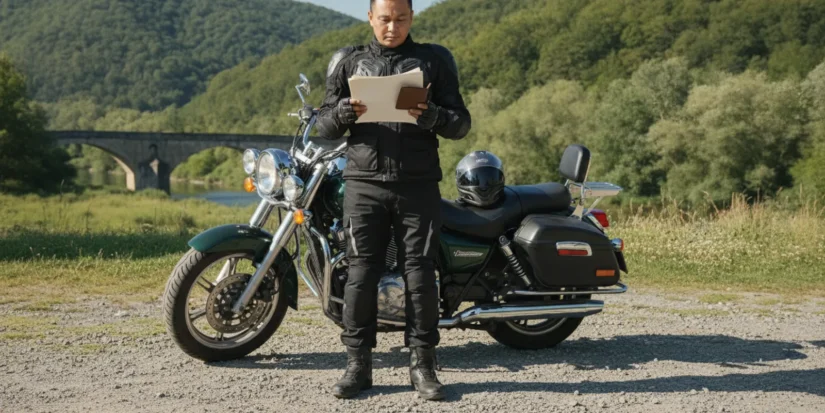
Understanding Georgia motorcycle insurance requirements can help you identify which coverage must be in place and what other protection may matter after a crash. Georgia generally requires motor vehicles operated on public roads, including motorcycles, to carry liability insurance. Knowing what liability covers, and what it does not, can help you ask clearer questions about a policy or injury claim.
Request a free case evaluation
What insurance does Georgia require for motorcycles?
Georgia’s financial responsibility rules generally require liability coverage for motor vehicles operated on public roads. The commonly stated minimum limits are $25,000 for bodily injury to one person, $50,000 for bodily injury to two or more people in one crash, and $25,000 for property damage. These are often abbreviated as 25/50/25. The Georgia Office of Commissioner of Insurance provides consumer information about auto insurance requirements and coverage. Check current state guidance and your policy before relying on a figure, particularly if you are reviewing an older policy or a specific registration situation.
Liability coverage is generally designed to pay for bodily injury or property damage you cause to someone else, subject to the policy’s terms and limits. It does not automatically pay to repair your own motorcycle or cover your own injuries when another person is responsible. Minimum limits set a legal baseline; they do not guarantee that every loss will be fully paid or that every type of loss is covered.
On a declarations page, find bodily injury and property damage limits separately. One number may apply per injured person, another per crash, and another to property. Confirm the effective dates and that the motorcycle involved is listed. If a term is unclear, ask the insurer to explain it in writing and keep the response with your policy documents.
What can minimum liability coverage leave uncovered?
Consider a rider whose motorcycle is damaged in a collision. The rider’s liability coverage ordinarily addresses injury or damage caused to others; it is not the same as coverage for damage to the rider’s own bike. If the rider purchased collision coverage, that coverage may apply under its terms and deductible. If another driver caused the crash, that driver’s liability policy may also be relevant. Those are separate questions, and the answer depends on the policy language and evidence.
Injury expenses raise a different set of questions. The at-fault driver’s bodily-injury liability coverage may be a source for a claim. Uninsured or underinsured motorist coverage, if available under the rider’s policy, may matter when the responsible driver has no insurance or insufficient limits. Medical payments coverage, if selected, may address certain medical expenses. None of these labels alone establishes payment; the insurer will apply policy conditions and investigate the circumstances.
Limits also matter in context. If several people are injured in one crash, a per-crash limit may be shared across claims. A policy limit is not a measure of the harm a person experienced, nor does it decide who caused the collision. Keep records of the policy limits disclosed, the claim number, and the insurer’s explanation of available coverage.
How do common motorcycle coverages differ?
Optional coverage can address different kinds of losses. A rider comparing policies can use this table as a question list, not as a substitute for the contract. Exact terms, exclusions, deductibles, and covered people vary by policy.
| Coverage | Possible purpose | Questions to check |
|---|---|---|
| Liability | Injury or property damage you cause to others, up to limits | What are the bodily-injury and property-damage limits? |
| Collision | Damage to your motorcycle from a collision, subject to terms | What deductible applies, and how is the motorcycle valued? |
| Comprehensive | Certain non-collision losses, such as theft or weather damage | Which events are covered and excluded? |
| Uninsured/underinsured motorist | Potential protection in some crashes involving an uninsured or underinsured driver | Was it selected, what limits apply, and what conditions govern? |
| Medical payments | Potential payment toward certain medical expenses, if selected | Which expenses and people qualify under the policy? |
Ask whether accessories, custom parts, helmets, or riding gear are covered, and whether the policy uses actual cash value or another valuation method for a damaged motorcycle. Ask how a deductible affects payment and what documentation the insurer requires. Do not assume that coverage for the motorcycle includes every item carried on it.
For information about injury claims involving motorcycles, see the firm’s motorcycle accident resource. It addresses the injury-claim context, which is distinct from choosing insurance limits before a loss.
How can you review a motorcycle policy step by step?
Gather the declarations page and full policy rather than relying only on an insurance card. The card can help identify the insurer and policy period, but usually does not show every coverage, limit, deductible, or exclusion. Work through the following steps:
- Confirm the policy period. Check whether coverage was active on the date in question. Note renewal dates and any gap or cancellation notice.
- Match the motorcycle to the policy. Compare the listed vehicle information with the motorcycle involved. If it is newly acquired or modified, ask how the policy treats it.
- Separate the liability limits. Write down bodily injury per person, bodily injury per crash, and property damage. Avoid combining these amounts unless the contract expressly does so.
- Find optional protections. Look for collision, comprehensive, uninsured or underinsured motorist coverage, and medical payments. Record whether each appears, its limit, and any deductible.
- Read exclusions and duties. Locate sections on notice, cooperation, permitted use, and excluded situations. Ask the insurer to explain unfamiliar language without relying on assumptions.
- Collect other potentially relevant policies. Depending on the facts, another household or vehicle policy, health coverage, or the other driver’s insurance may raise separate questions.
For example, suppose the declarations page lists liability but no collision. After a crash, the rider’s own liability coverage would not ordinarily be the source for repairs to the rider’s motorcycle. If another driver may have caused the collision, that driver’s insurer could investigate property damage and injury claims. Meanwhile, the rider should check whether any other policy applies and preserve repair estimates. A different policy configuration could lead to a different process.
A second example: a rider has collision coverage with a deductible and a separate injury claim involving another driver. The collision claim may address bike damage under the rider’s policy, while the injury claim may involve fault, bodily-injury limits, and medical records. Separate adjusters or claim numbers may be involved. Keep a simple log of who is handling each issue, what was requested, and when a response is expected; do not assume that progress on one claim resolves the other.
What information should you preserve after a motorcycle crash?
Safety and medical attention come first. When it is safe and practical, record the information that can help establish what happened and document the resulting losses:
- Exchange contact and insurance information with the other driver and obtain witness contact details when possible.
- Photograph vehicle positions, visible damage, road conditions, signs, debris, and injuries, if doing so is safe.
- Note the date, time, location, weather, and responding agency; retain report or incident information.
- Save medical records, bills, discharge instructions, prescriptions, repair estimates, towing receipts, and photographs of damaged gear.
- Keep insurer letters, emails, claim numbers, and notes of phone calls, including the date and the person spoken with.
- Preserve original files where possible. Avoid editing photographs in ways that remove date or context information.
A crash report may contain useful information, but it is one part of the record and does not necessarily answer every question about responsibility. Avoid guessing when asked about details you do not know. Report the incident as required by the policy and keep a copy of what you submitted. The firm’s Georgia car accident information discusses related collision issues.
How can fault and policy limits affect an injury claim?
Insurance analysis often involves more than identifying the highest limit on a declarations page. Evidence about how the crash occurred may affect responsibility. Relevant material can include photographs, witness accounts, vehicle damage, the crash report, and records of treatment. If more than one person or entity may have contributed, the policies and factual questions may be more complex.
It can help to distinguish three questions: who may be responsible for the collision, what insurance could apply, and what losses are documented. A policy can exist even when responsibility is disputed. A claim can be made even when the available limit is lower than the losses being claimed. And the existence of a limit does not by itself establish the amount payable. Keeping those questions separate makes insurer communications easier to follow.
When reviewing a coverage position, ask the insurer to identify the policy provision it is relying on, the limit or deductible involved, and any missing document it needs. Record the answer and deadline stated in the letter. If you receive a release or settlement document, understand what claims it covers before signing. For a general overview of how the firm evaluates potential injury matters, see information about discussing a claim.
What should you do when an insurer contacts you?
Make a folder for each claim and keep a short timeline. Include the crash date, first report, inspection, medical visits, and each communication. This is useful even when an insurer is responsive: it prevents a request from getting lost and helps you distinguish a conversation about bike damage from one about bodily injury.
Before a call, write down the point you need clarified. For example: “Is this estimate for the motorcycle only?” “Does this figure include the deductible?” “Which coverage and limit are being considered?” “What records are still needed?” Afterward, note the response and any promised next step. If the answer is unclear, ask for a written explanation.
Do not sign a document simply because it is described as routine. A repair authorization, medical-record release, and settlement release can have different effects. Read the document, keep a copy, and ask questions about its scope. If the dispute concerns an injury or the interaction of several policies, a case-specific review may help clarify the issues and available next steps.
Frequently asked questions
Is motorcycle insurance mandatory in Georgia?
Georgia generally requires motor vehicles operated on public roads, including motorcycles, to carry minimum liability insurance. Check current state guidance and the terms of the particular policy for your situation.
Does minimum liability insurance cover damage to my own motorcycle?
Liability coverage generally concerns injury or property damage you cause to others. Damage to your own motorcycle may involve collision coverage or another applicable source, depending on the policy and circumstances.
Can uninsured motorist coverage help after a motorcycle crash?
It may be relevant in some situations involving an uninsured or underinsured at-fault driver, depending on the selected coverage, limits, policy conditions, and facts. Review the actual policy rather than assuming it applies.
Does helmet use determine whether insurance applies?
Insurance coverage depends on policy terms and the circumstances of the crash. Helmet use can raise separate factual or legal questions, but it does not by itself answer every coverage question. The firm’s motorcycle accident page provides additional general information about injury claims.
Discuss the coverage and crash in context
Insurance documents can be difficult to interpret when more than one policy may be involved. Henningsen Injury Attorneys represents injured people and families across Georgia. Each matter needs its own evaluation. Learn more about the firm’s attorneys and approach, or contact the firm to discuss a potential injury claim.
If a motorcycle crash has raised questions about coverage or an injury, gather the policy, claim correspondence, and available crash records before requesting a case-specific evaluation.